Design: Maeve Redmond
In conjunction with her show ‘ISBN 978-1-913983-97-0 (EVERY WORD UNMADE)’, Fiona Banner aka The Vanity Press shares texts which have influenced her practice. In her own words, banner introduces a selection of poetry books, or poems that can be understood as books. All of which confront their own medium, or form and all of which are intimately involved in the concept of time, and its incumbent (im)possibilities.
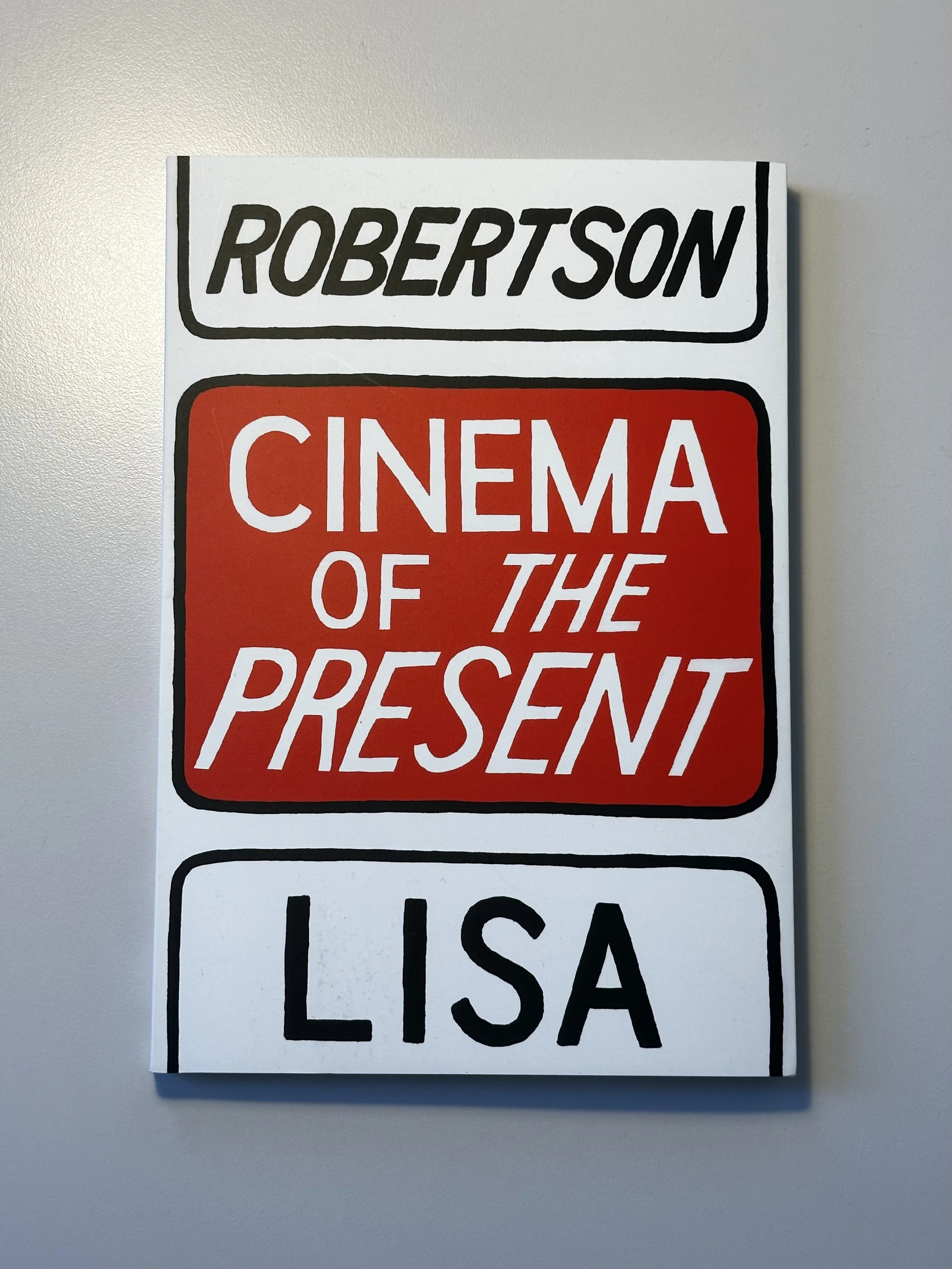
Lisa Robinson, ‘Cinema of the Present’ (2014).
‘Cinema of the Present’ by Lisa Robinson
“This epic (anti epic) poem understands that ‘cinema’ is a verb.”
“Also it may not be a poem, and is perhaps best announced by quoting the first line…. ‘What is the condition of a problem if you are the problem? You move into the distributive texture of an experimental protocol.’”
“Lisa, essayist, poet, teacher… also works under the name, ‘The Office for Soft Architecture’, which brings to mind more of a tent, than a house or office… peripheric and element-sensitive.”
“A quorum of crows will be your witness.
And if you discover you were bought?
You note the smell of rain, bread, and exhaust mixed with tiredness.
And if you yourself are incompatible with your view of the world?
And what is the subject but a stitching?
Once again you are the one who promotes artifice.
At 2 am on Friday, you burn with a maudlin premonition.
And rankings and rankings and badges and repetitions.”
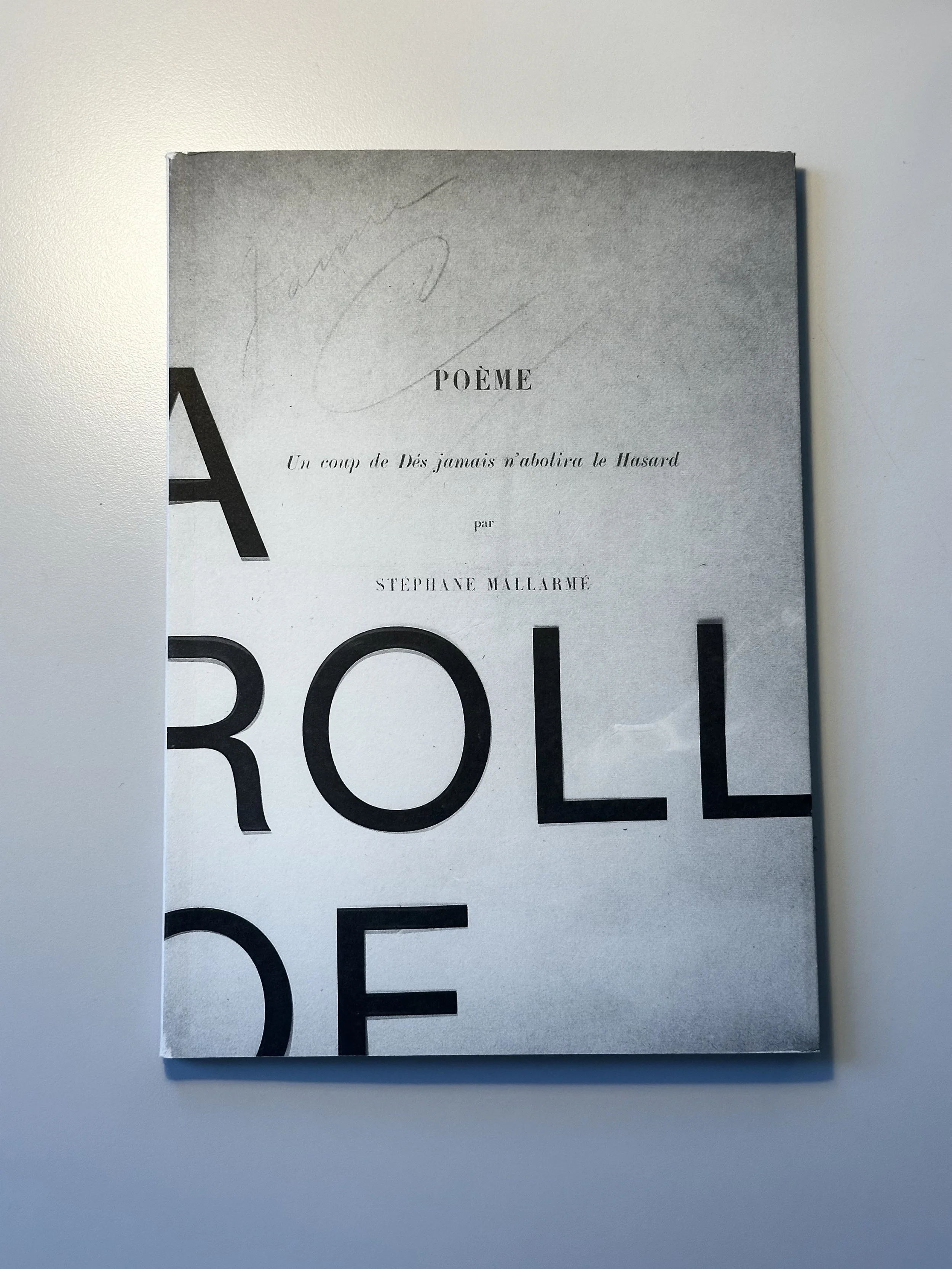
Stephane Mallarmé, ‘Un Coup de Dés’ (1897)
‘Un Coup de Dés’ by Stephane Mallarmé
“I have always been confounded by Mallarmé, but that is his game. Almost impossible to add any words to ‘Un Coup de Dés’, but perhaps to say this is a book about time, the conceit of the present tense, in literature and in being… the suspension, represented by the space on the page itself, between anticipation and memory. It is written and laid out as if language was music slowly falling through space. Like he really understands that the page is the landing strip for words, and they must find the right place.”
“Mallarme was a dissonant in a time dedicated to harmony, a flaneur in the shadows, observer of everyday life, etiquette, dance, fashion… words… whose work, is perhaps now so assymilated, it impossible to feel jeopardy of it in it’s time. He anticipated and inspired several revolutions in the early 20th century Cubism, Futurism, Dadaism, and Surrealism, all of which is pointless to say because he was against definition and categorisation, as am I!”
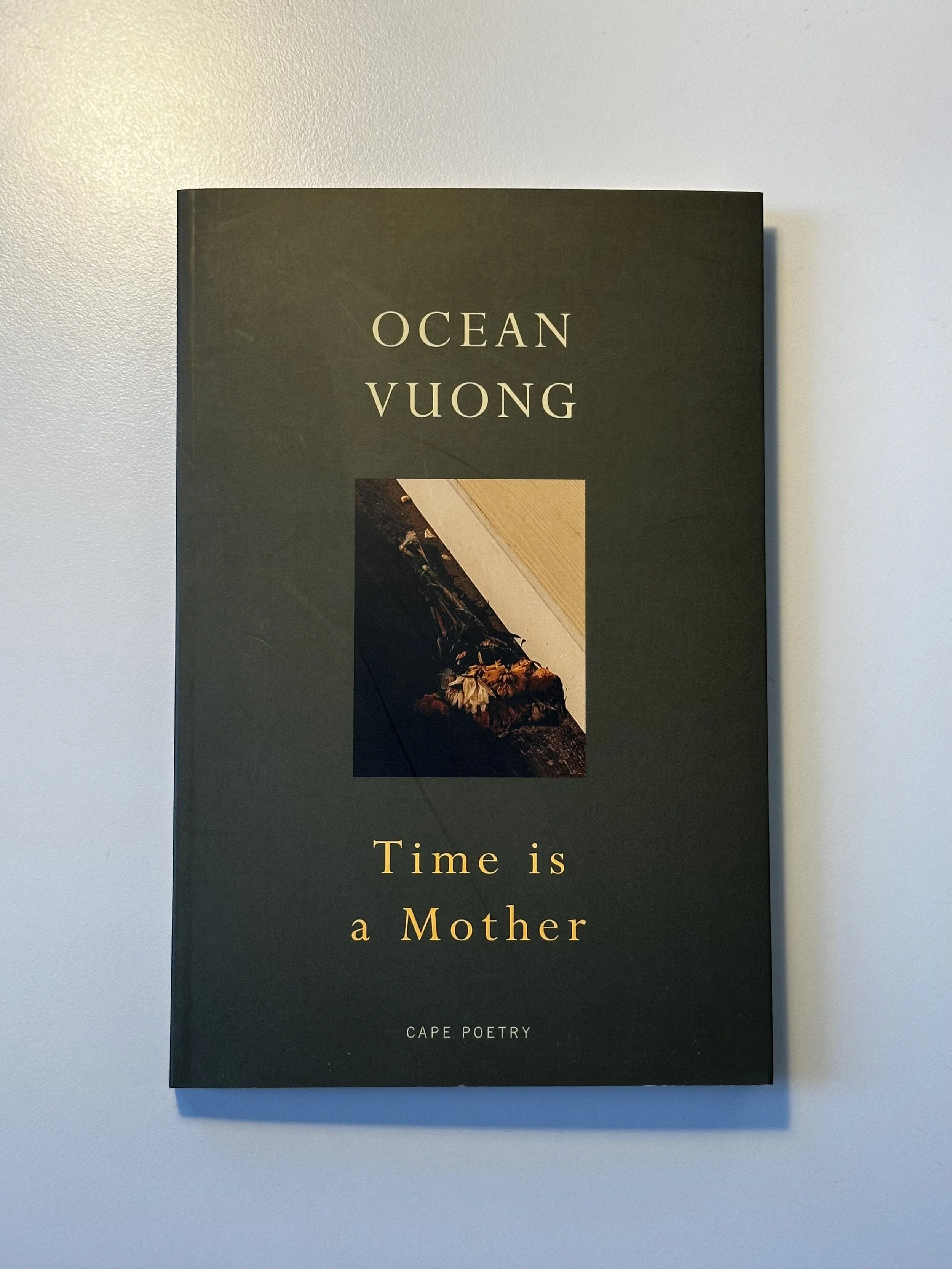
Ocean Voung, ‘Time is a Mother’ (2022).
‘Time is a Mother’ by Ocean Vuong
“Ocean Vuong speaks in a voice soft yet lit by fluorescent lights (no sentimentality here) to the violence embedded in today’s language. Watching out for how we use it, alert to the vernacular creep of brutality, leaving space for possibilities of tenderness. His mum was Vietnamese and father an American GI, Vuong is absolutely in the now but feels through a legacy of conflict as someone whose heritage is on both sides of that conflict.”
“He grasps the umbilicus between words and where they come from, time is a mother!”
“In this interview, Ocean talks about his Buddhist family’s tradition of the act of taking the shoes off when you enter a home, what is embedded in that act of respect. He says his work process involves him taking the shoes off his voice, so he can enter with care.”
Listen to Ocean Vuong’s interview with On Being here.
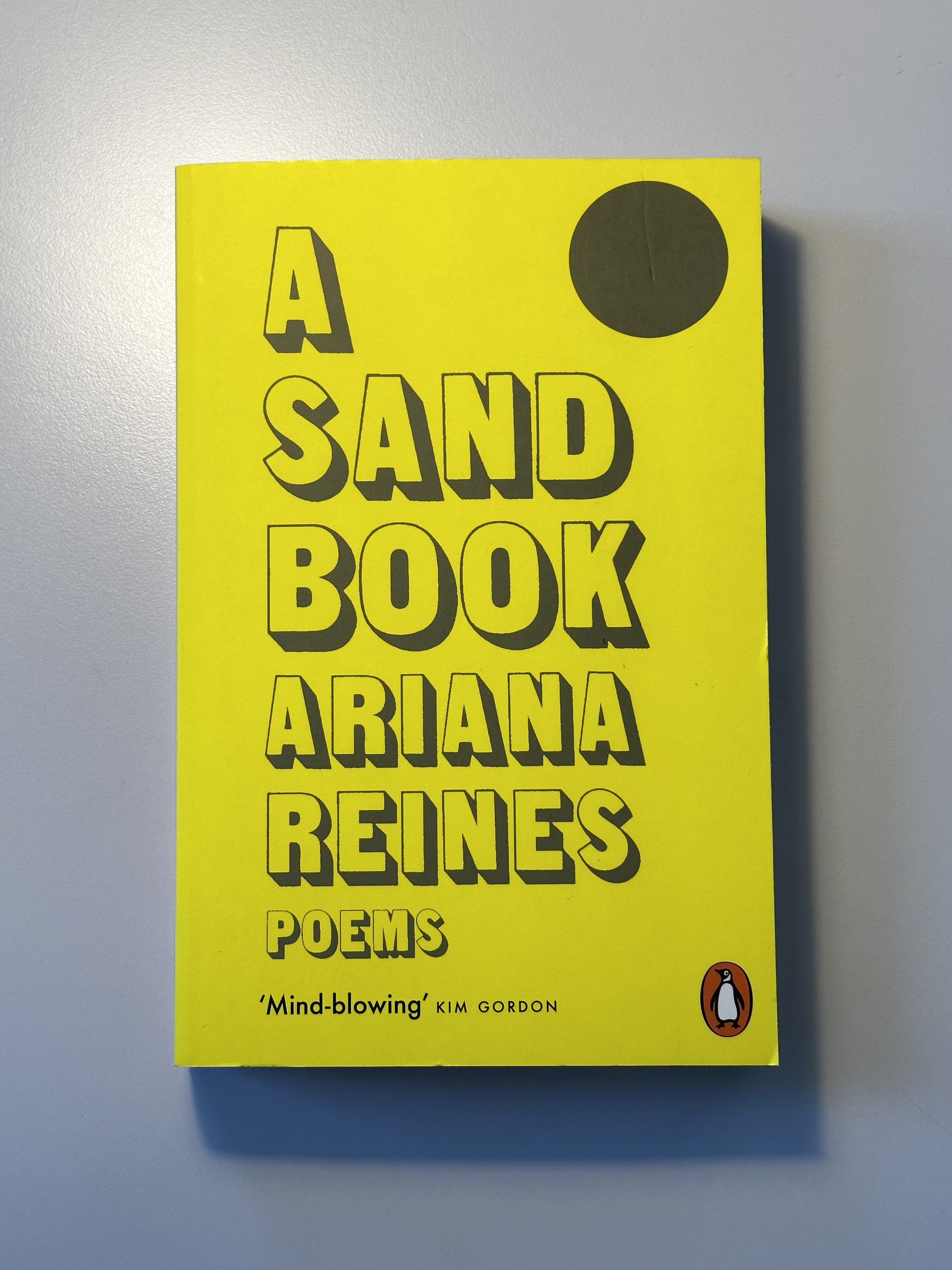
Ariana Reines, ‘A Sand Book’ (2019).
‘A Sand Book’, Ariana Reines
“I first encountered Ariana Reines on an Instagram live, when I stumbled into her Invisible College seminar one day. I stayed for the whole hour, wondering who is this sassy intimate interplanetary visionary earth mother of language. I immediately brought The Sand Book.”
“She plays across logics; the occult, spirituality, mythology, politics of now, sex, deep time – words always from the deep body, visceral, never a dry page.”
“When we met at the London Review of Books sometime later at the launch for her book ‘A Wave of Blood’. I asked her about a poem I thought she’d written that riffed on the semantics of the words Volvo and Vulva, she said, ‘I wish!’. It turned out that I had dreamt it! It led to the conversation together for Mortal Coil.”
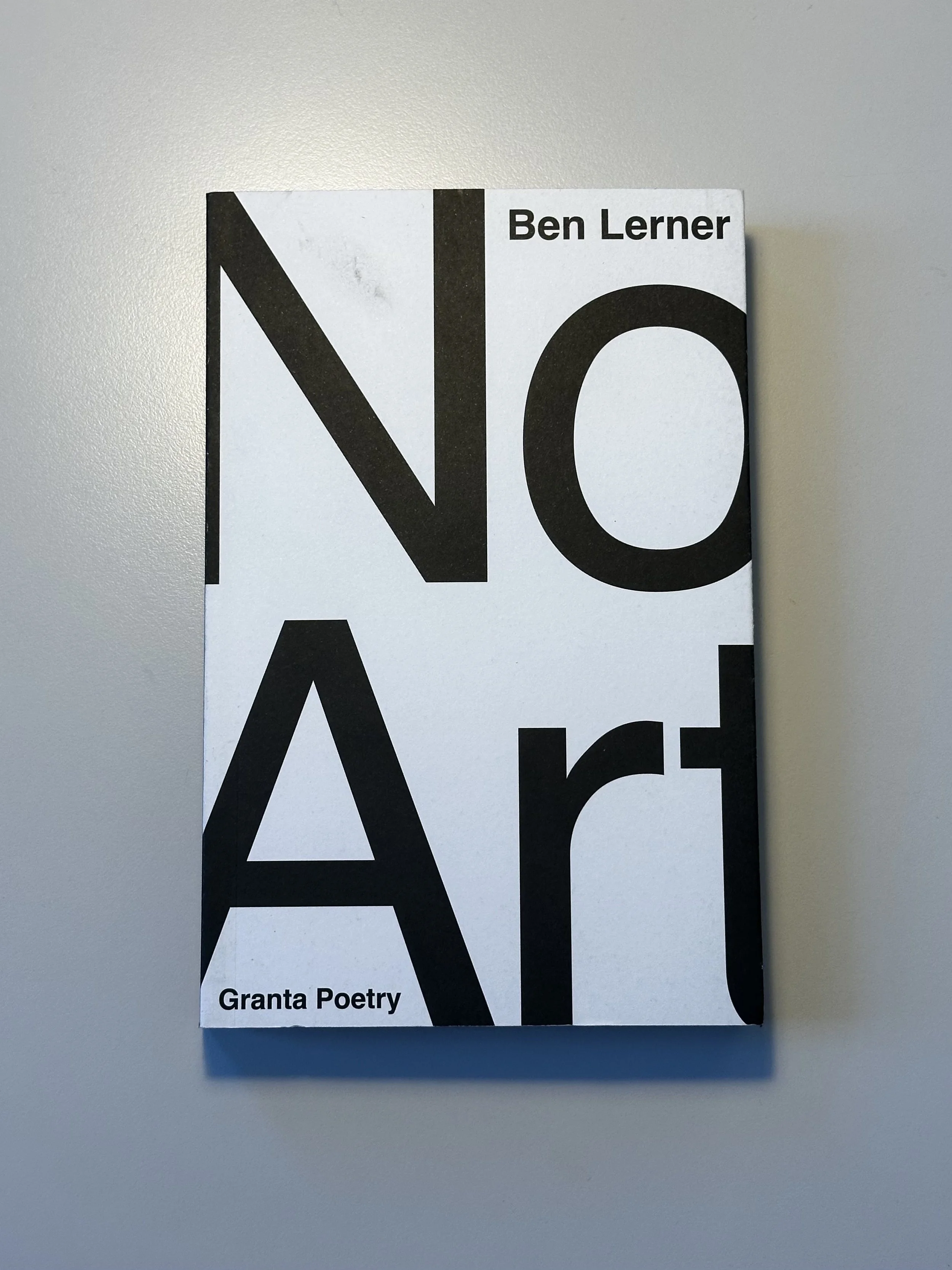
Ben Lerner, ‘No Art’ (2016)
‘No Art’, Ben Lerner
“I found this book browsing in Foyles’ poetry section one evening, the spine grabbed me – I bought it for the title. (It is good to be iconoclastic in your chosen medium, so it spoke to me.) I have probably read all his work since.”
“Lerner also wrote a book called ‘The Hatred of Poetry’, which reveals his love of it. In an interview in the Guardian he said ‘Poetry is this space where every single particle of language is charged with the most meaning’’.
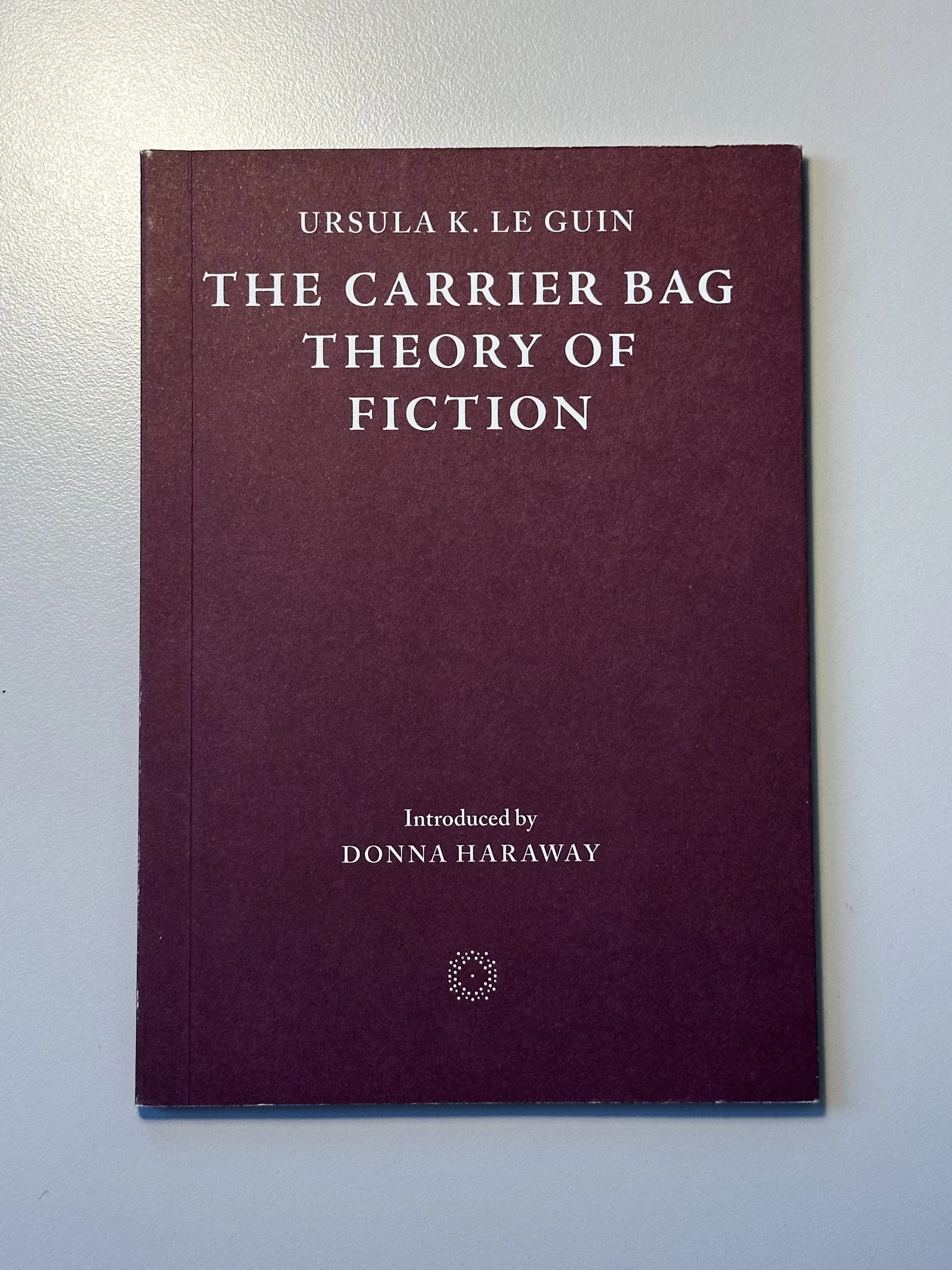
Ursula K. Le Guin, ‘The Carrier Bag Theory of Fiction’ (1986)
‘The Carrier Bag Theory of Fiction’, Ursula K. Le Guin
“The natural, proper, fitting shape of the novel might be that of a sack, a bag. A book holds words. Words hold things. They bear meanings.”
“Grand Maestra of si-fi and speculative fiction Ursula Le Guin wrote this this very small, but enormous book in 1986, a meditation on the problem of the hero in literature and in the world. It is also an anti-war poem of sorts. In it, the container (carrier bag) has more velocity than the weapon (spear). It addresses the conspiracy of linear narrative, in all aspects and debunks the myth of masculinity, in this time of macho grandstanding and posturing it is essential reading.”
“I came across ‘The Carrier Bag Theoryof Fiction’ a couple of years ago, it has meant a lot to me and connected with works I had made when I was in my 20’s, and I felt it had been an unmet friend in the wings, across those decades.”
Details
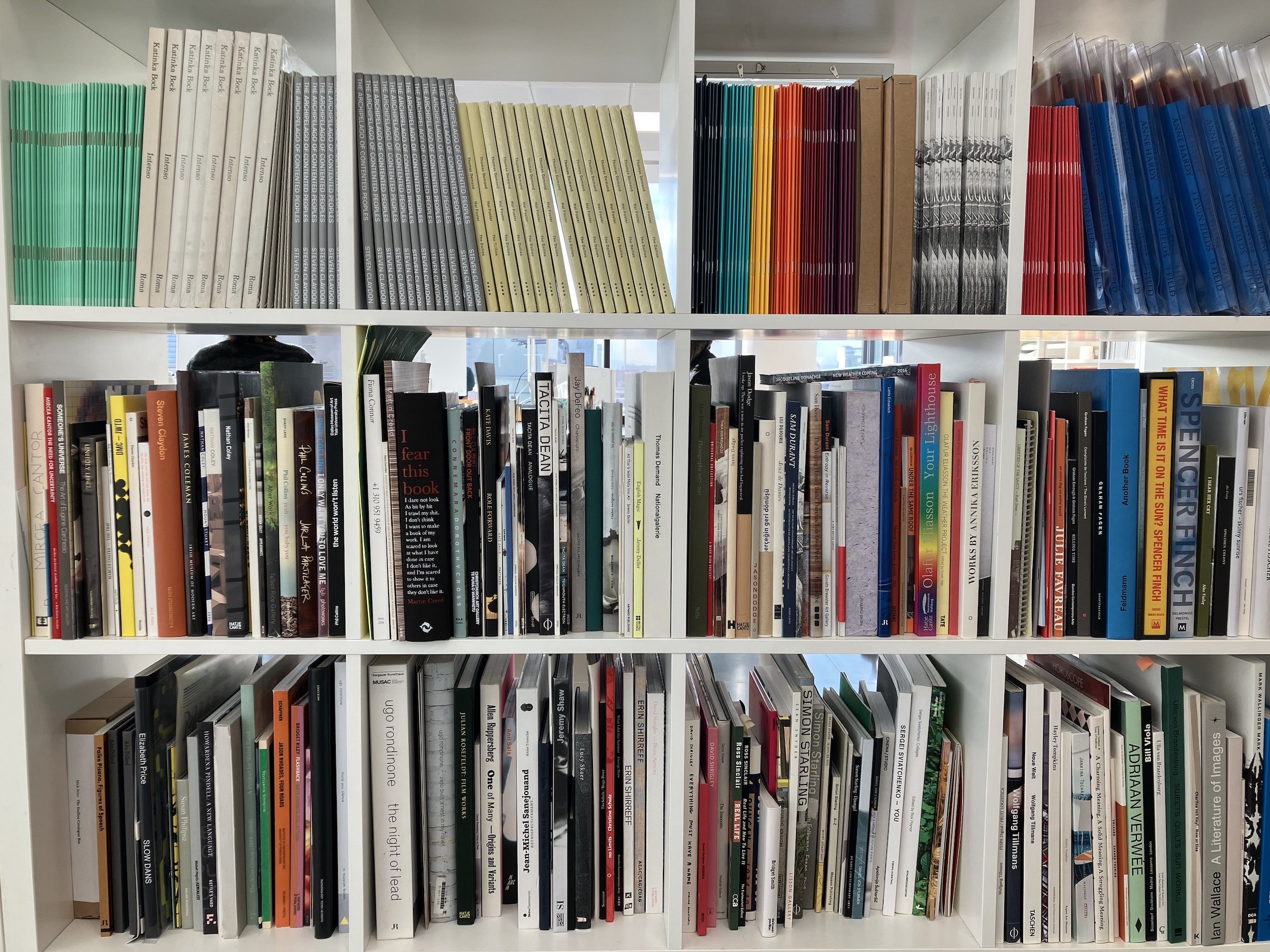
In conjunction with our projects, exhibitions and events, Room for Reading offers artists we work with an opportunity to contribute to The Common Guild library and share the books and resources that have influenced their artistic practice.
Every artist’s selection is added to The Common Guild’s expansive reference library of artist books, catalogues, and cultural and critical theory.
Visit
The Library is open Thursday–Saturday, 12–5pm during exhibitions.
Free refreshments, including tea and coffee are available.
Browse
Browse our library catalogue online here.