Design: Maeve Redmond
Orsod Malik is a curator, researcher, writer and director of the Stuart Hall Foundation. Malik’s Library Session talk, ‘Insisting on Another Horizon’, was presented on 27 November. To accompany the talk, Malik shares a collection of texts that centre the foundational relationships and ideas that continue to shape his curatorial practice.
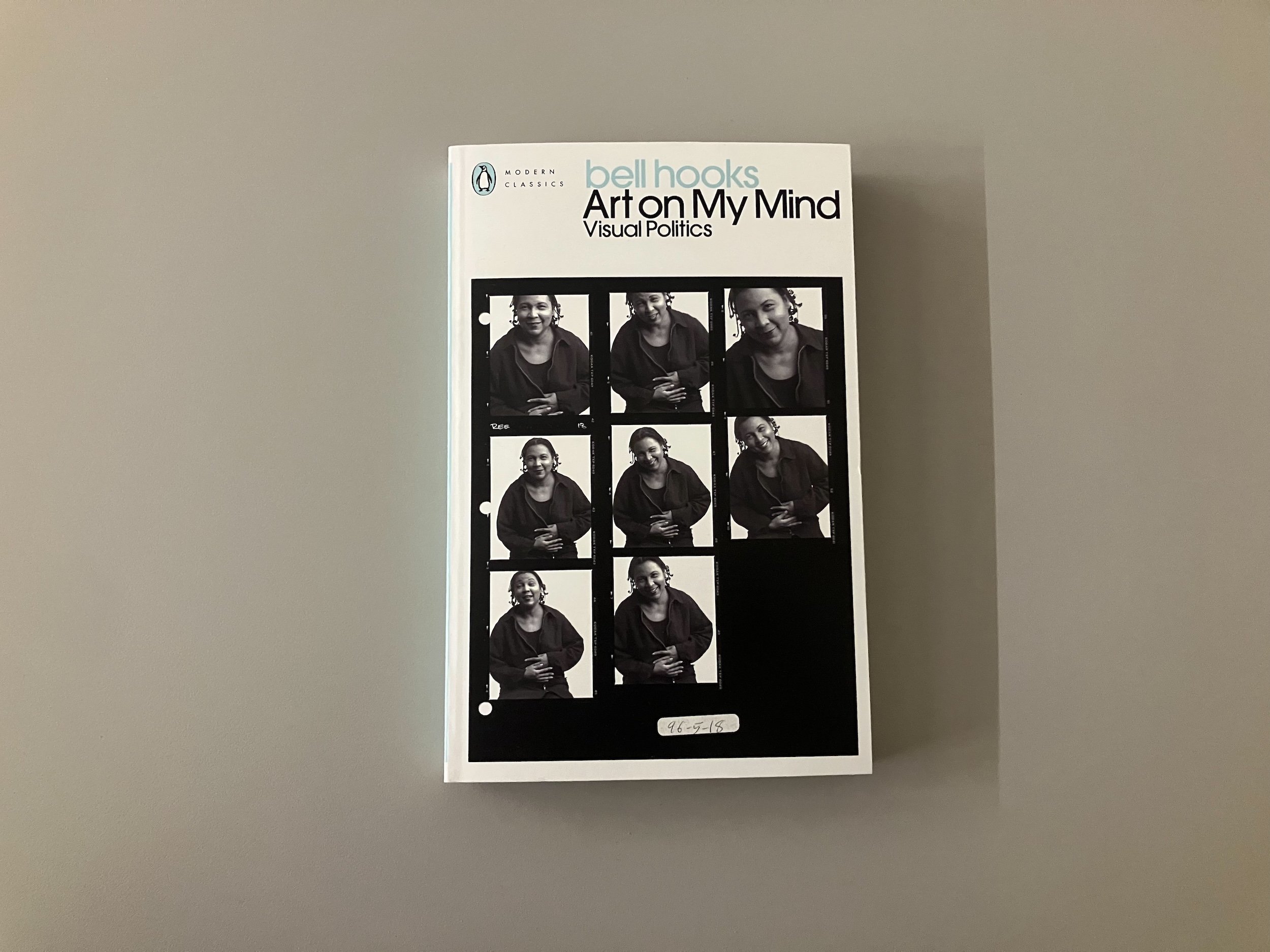
bell hooks, ‘Art on My Mind: Visual Politics” (2025).
“I know contributors to the Room for Reading don’t normally pose a theme, but I thought I’d base my recommended texts on some cherished relationships and their impact on my work.”
Art on My Mind: Visual Politics (2025) by bell hooks.
“Emmy Yoneda is an editor and artist who I regularly collaborate and think with through our curatorial collective, Minor Key. Yoneda led the way in republishing this bell hooks text while she was working at Penguin Random House, and it is one of the foundational texts that guides our work together and individually. Emmy is also my wife.
“Here is an excerpt from the essay ‘Workers for Artistic Freedom’, which I think captures the core ideas and interventions hooks offers in this critical collection of essays”:
Art should be, then, a place where boundaries can be transgressed, where visionary insights can be revealed within the context of the everyday, the familiar, the mundane. Art is and remains such an uninhibited, unrestrained cultural terrain only if all artists see their work as inherently challenging to those institutionalised systems of domination (imperialism, racism, sexism, class elitism, etc.) that seek to limit, co-opt, exploit, or shut down the possibilities for individual creative self-actualisation.
Read a pdf of ‘Art on My Mind: Visual Politics’ here.
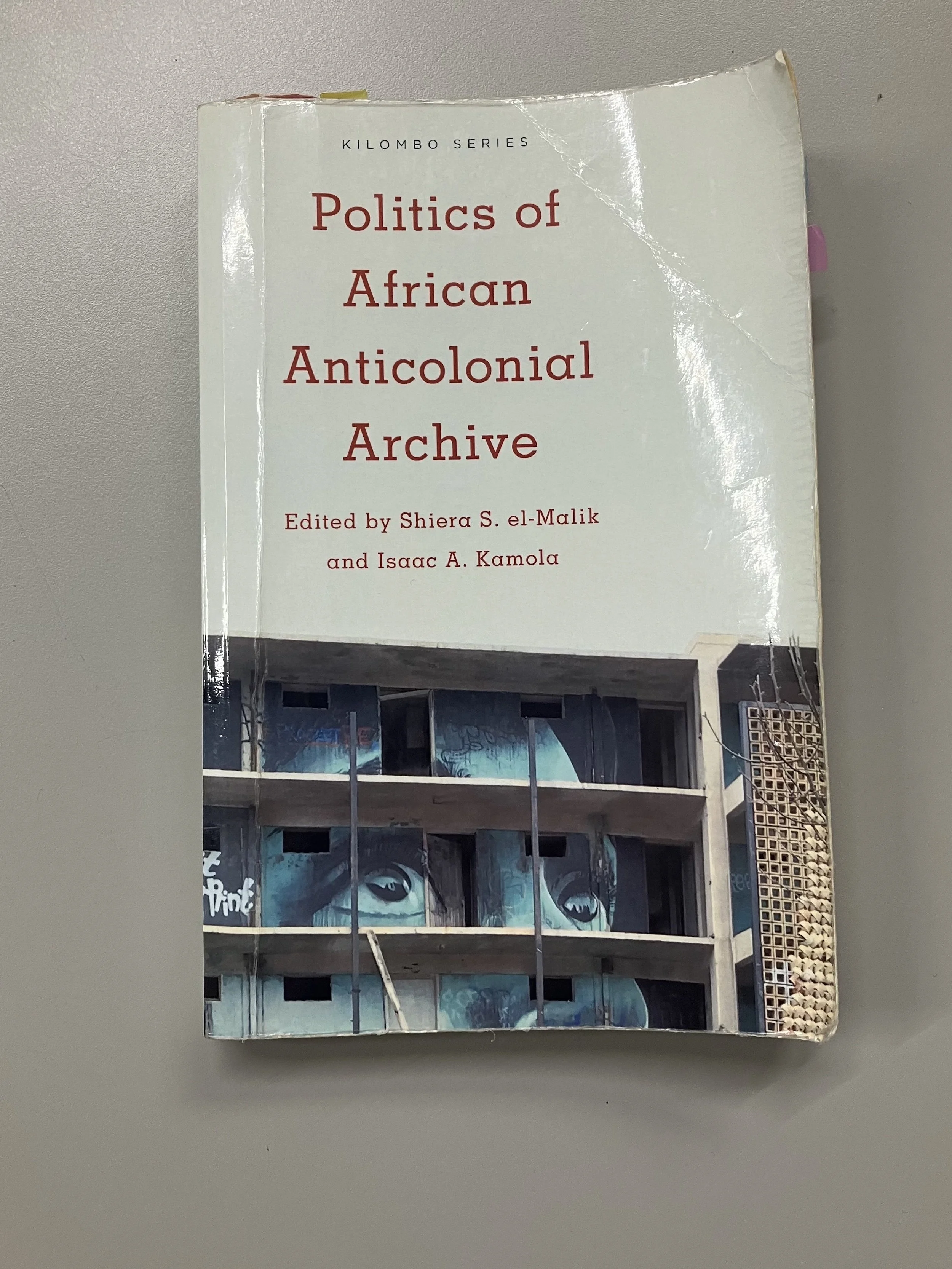
Shiera S. el-Malik and Isaac A Kamola, ‘Politics of the African Anticolonial Archive’ (2017).
Politics of the African Anticolonial Archive (2017) by Shiera S. el-Malik and Isaac A Kamola.
“Shiera El-Malik is an Associate Professor in the Department of International Relations at DePaul University, Chicago. El-Malik was my first creative and intellectual mentor, and she continues to offer me guidance as a deeply cherished interlocutor. Shiera is also my sister and eldest sibling.
Shiera handed me this text when it was published. It remains a foundational resource for my curatorial practice and guides my approach to working with archives. Here is an excerpt I return to often:
What might happen if we universalise, in a grounded way, the experience of African anticolonial thought? What if we suggest that the fight against colonialism in Africa was not only a particular and exceptional experience, but also a universalising articulation of the human condition – an experience with insights that might be shared by all people?”
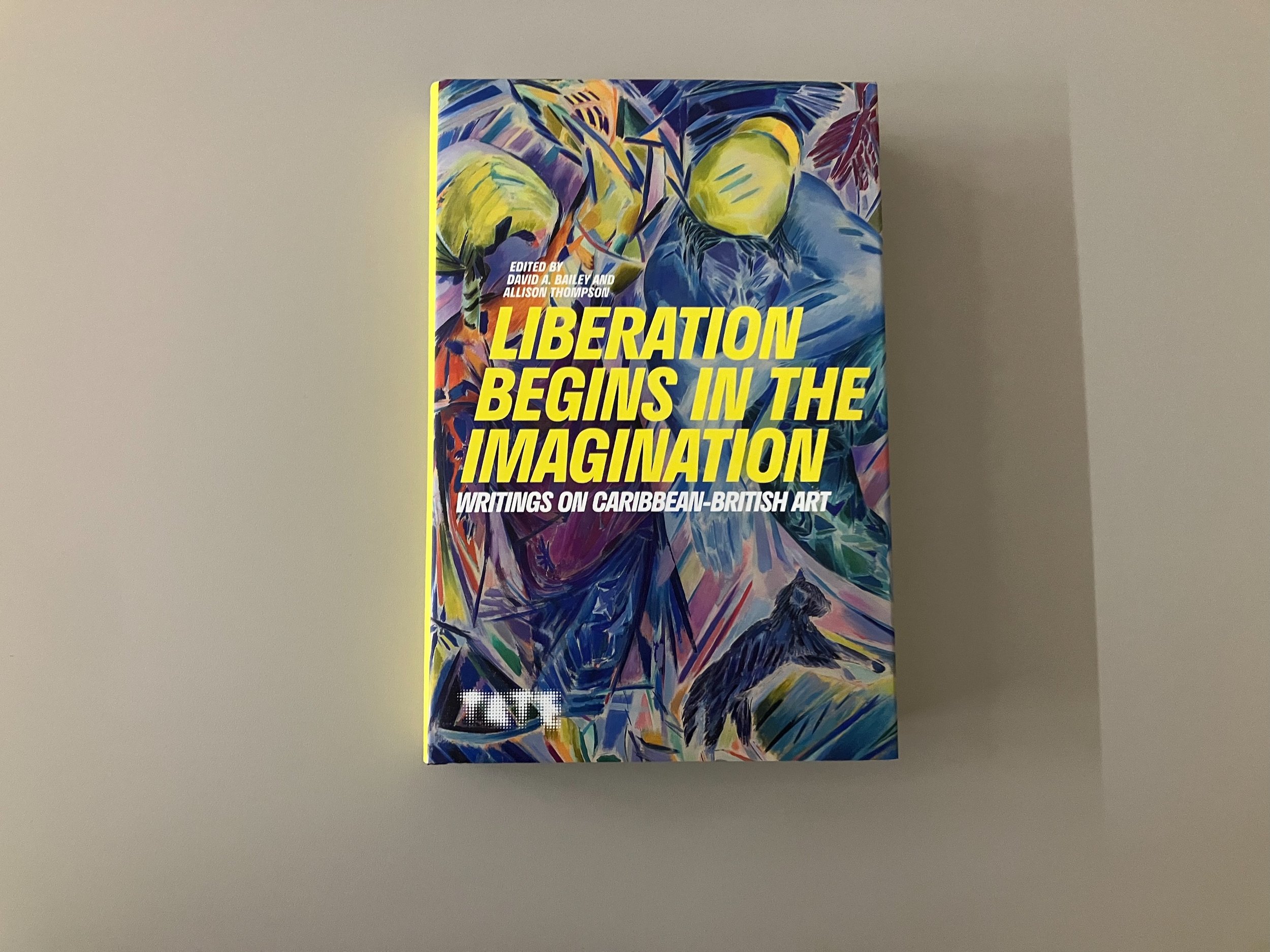
David A. Bailey and Allison Thompson, ‘Liberation Begins in the Imagination’ (2021)
Liberation Begins in the Imagination (2021) by David A. Bailey and Allison Thompson.
“David A. Bailey, the co-editor of this collection, has played a critical role in nurturing my curatorial practice. Bailey is a world-renowned curator, writer and cultural facilitator. He is a dear mentor and was the first elder who offered me the space to pursue the cultural and political questions that preoccupied me through exhibition-making. Working closely with him and Jessica Taylor at the International Curators Forum between 2021–2024 gave me the confidence to contribute to contemporary discourses that are reshaping the sector.
‘Liberation Begins in the Imagination’ gathers the work of creative and intellectual practitioners, some of whom I have the privilege to know and learn from through my work at the Stuart Hall Foundation, including Gilane Tawadros, Roshini Kempadoo, and Françoise Vergès. The collection continues Bailey’s work of stretching the limits of what is considered “British art” by exploring the co-constitutive relationship between the Caribbean and Britain.”
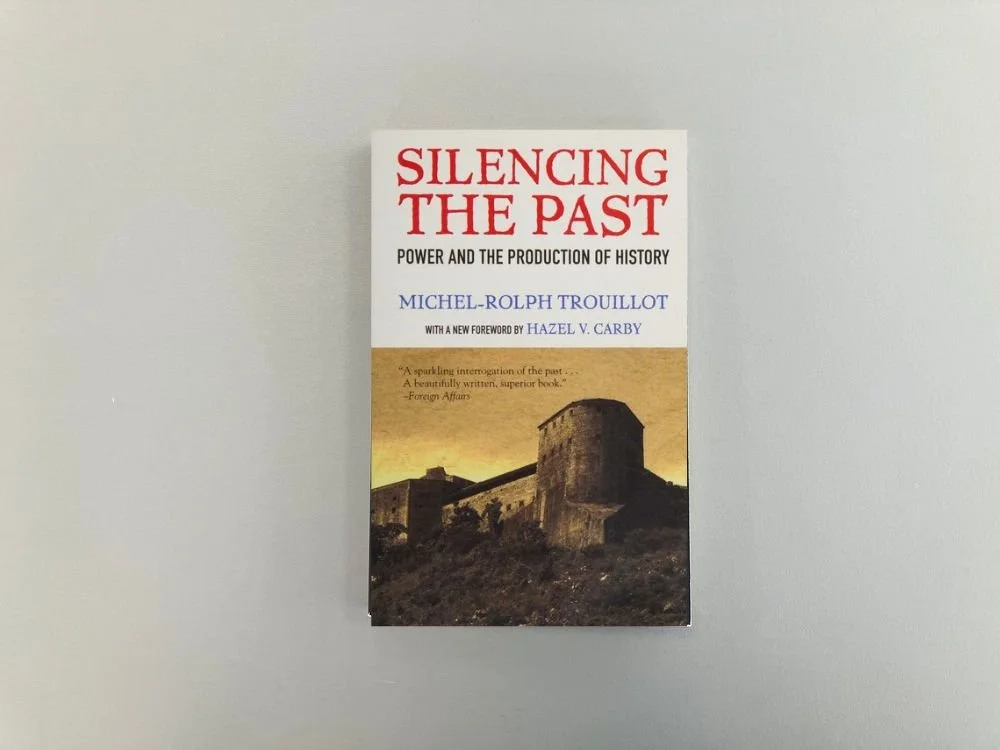
Silencing the Past: Power and the Production of History (1995) by Michel-Rolph Trouillot.
Silencing the Past: Power and the Production of History (1995) by Michel-Rolph Trouillot.
“I don’t know Michel-Rolph Trouillot personally! However, this book has been a critical companion to my practice and is a foundational text for many who are concerned with questions about the relationship between power, the production of history, and collective identities.
‘Silencing the Past’ helped shape my work on the Prince Claus Fund’s Moving Narratives Programme this year. It stimulated many of the conversations I had with the 12 artists on the programme, all of whom engage with history through their practices.
We thought with Trouillot to consider how we were working with and against historical narratives - individually and collectively. I feel very privileged to have worked with each of the artists this year and to call them friends. I’ll end with an excerpt from Trouillot:
Thus between the mechanically ‘realist’ and the naively ‘constructivist’ extreme, there is the more serious task of determining not what history is – a hopeless goal if phrased in essentialist terms – but how history works. For what history is changes with time and place, or, better said, history reveals itself only through the production of specific narratives. What matters most are the processes and conditions of production of such narratives. Only a focus on that process can uncover the ways in which the two sides of historicity intertwine in a particular context. Only through that overlap can we discover the differential exercise of power that makes some narratives possible and silences others.’”
Read a pdf of ‘Silencing the Past’ here.
Details
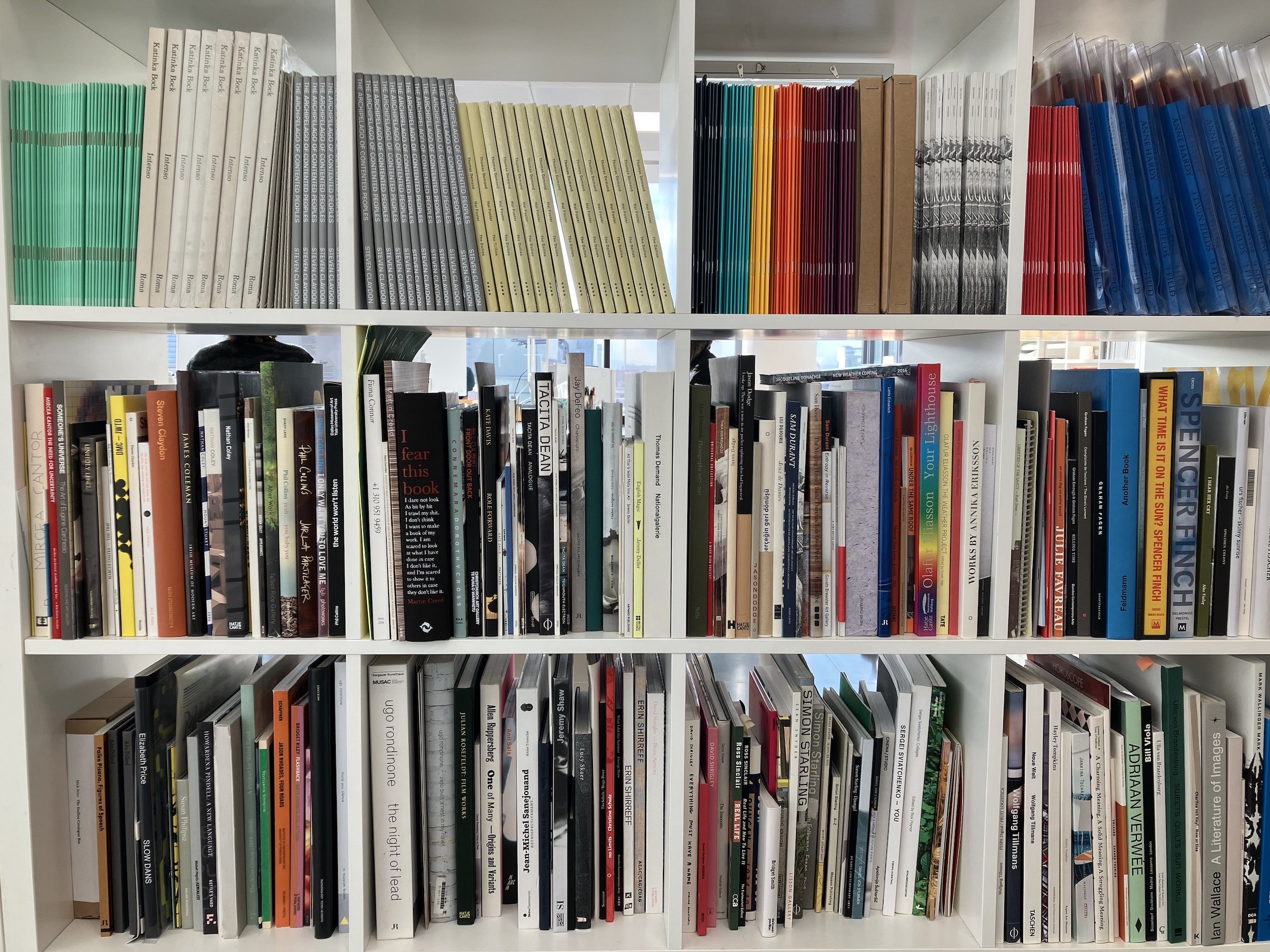
In conjunction with our projects, exhibitions and events, Room for Reading offers artists we work with an opportunity to contribute to The Common Guild library and share the books and resources that have influenced their artistic practice.
Every artist’s selection is added to The Common Guild’s expansive reference library of artist books, catalogues, and cultural and critical theory.
Visit
The Library is open Wednesday – Saturday from 12–5pm during exhibitions.
Free refreshments, including tea and coffee are available.
Browse
Browse our library catalogue online here.
Related